
Your cold email has two links, three questions, and ends with "Let me know if you'd like to chat, download our case study, or check out our pricing page."
That's not a call-to-action. That's a choose-your-own-adventure that leads nowhere.
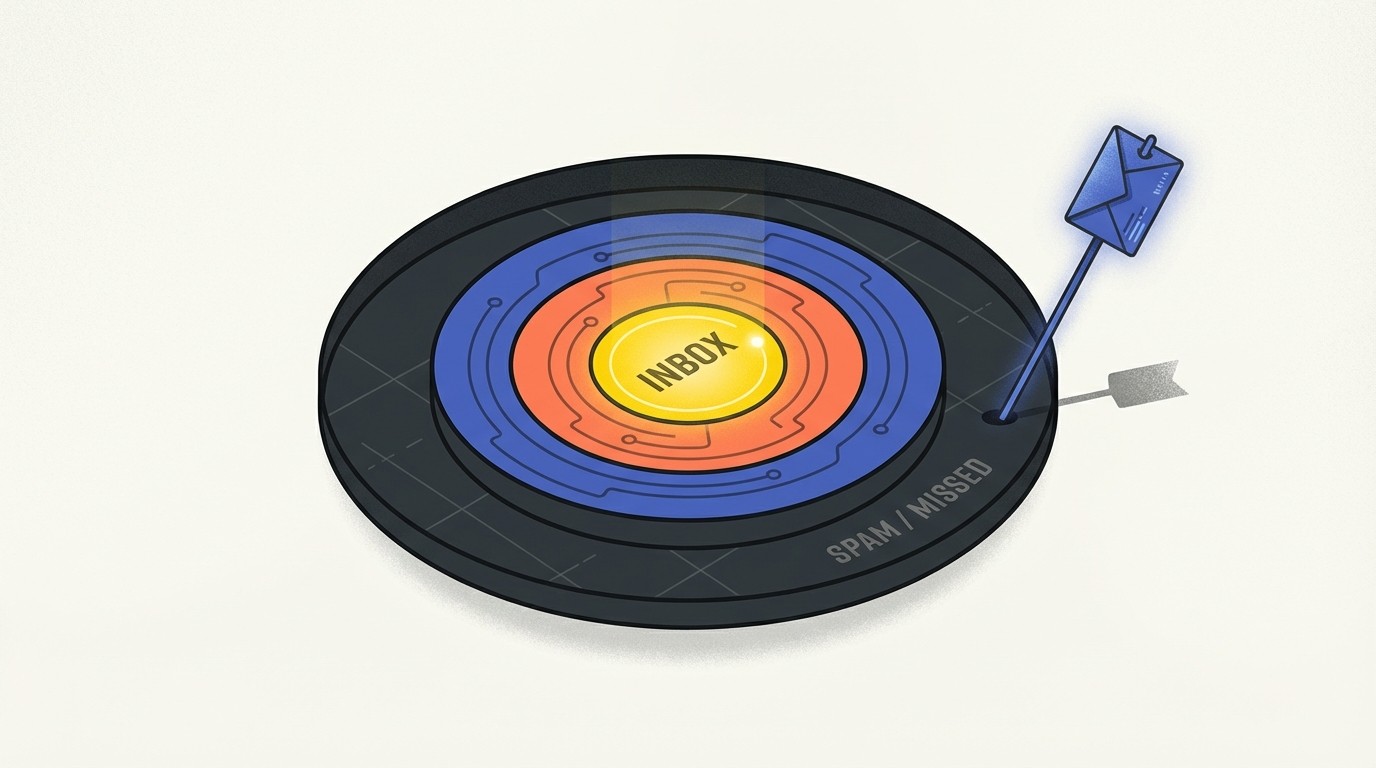
The single CTA rule is simple: one email, one ask.
The Psychology of Choice
Barry Schwartz's research on the paradox of choice reveals a counterintuitive truth: more options lead to fewer decisions.
When presented with too many choices, people:
Experience decision paralysis
Delay making any choice
Feel less satisfied even when they do choose
Applied to cold email: every additional CTA reduces the likelihood of any action.
What Happens With Multiple CTAs
The Cognitive Load Problem
Your prospect is scanning emails between meetings. They have 3 seconds of attention to give you.
Email A: "Want to schedule a call?"
Email B: "Want to schedule a call? Or download our whitepaper? Or check out our case studies? Or reply with questions?"
Email A requires one decision: yes or no.
Email B requires evaluating four options, comparing them, and choosing. That's cognitive work most busy people won't do.
The result? Neither call scheduled, nor whitepaper downloaded, nor case studies checked. Just an email archived for "later" that never comes.
The Dilution Effect
Each CTA dilutes the importance of the others.
If you ask for a meeting and offer a download, you signal that the meeting isn't that important—there's an easier alternative. And if the download is just as good, why did you bother with the meeting ask?
Multiple CTAs undermine each other.
The Measurement Problem
With multiple CTAs, attribution becomes murky.
Did the email work because they clicked the case study link? Or did that click mean they weren't interested enough to meet? How do you optimize when success has multiple definitions?
Single CTA, clear measurement.
The Right CTA for the Right Stage
Not all asks are created equal. The optimal CTA depends on funnel stage and relationship warmth.
Interest-Based CTAs (Early Stage)
For first touches when you haven't earned the right to ask for time:
"Worth exploring?"
"Interested in learning more?"
"Does this resonate?"
"Something you're thinking about?"
Goal: Start a conversation, not book a meeting.
Best for: Cold outreach to unaware prospects.
Soft Commitment CTAs (Building Interest)
For follow-ups when they've shown some engagement:
"Want me to send over some details?"
"Should I share how [similar company] handled this?"
"Would a quick overview be helpful?"
Goal: Provide value, build trust.
Best for: Prospects who opened but didn't reply.
Direct Meeting CTAs (Qualified Interest)
For prospects who've engaged and shown genuine interest:
"Open to a 15-minute call this week?"
"Does [specific time] work for a quick chat?"
"Worth a conversation?"
Goal: Convert interest to meeting.
Best for: Warm leads, engaged prospects, referrals.
Exit CTAs (Break-Up Emails)
For final touches when ending a sequence:
"If things change, reach out."
"I'll step back—door's always open."
No CTA at all (just a graceful close)
Goal: Close professionally, leave positive impression.
Best for: Non-responsive prospects at sequence end.
CTA Laddering Across Sequences
Single CTA doesn't mean same CTA. Your ask should evolve through your sequence.
E1: Interest-based — "Worth exploring?"
E2: Soft commitment — "Want me to send details?"
E3: Direct meeting — "Open to a quick call?"
E4: Flexible — "What would be most helpful?"
E5: Exit — "Door's open if things change."
This progression earns the right to bigger asks by providing value first.
The Exception: Binary Choices
There's one exception to single CTA: offering exactly two choices that simplify rather than complicate.
Works:
"Would Tuesday at 2pm or Wednesday at 10am work better?"
This isn't really two CTAs—it's one ask (meet) with a simplified decision path. You're making it easier to say yes by reducing scheduling friction.
Doesn't work:
"Would you prefer a call, or should I send our deck instead?"
This is two genuinely different CTAs competing for attention.
The test: are you simplifying one decision or creating two decisions?
Crafting Effective CTAs
Be Specific
Bad: "Let me know your thoughts."
Good: "Would a 15-minute call next Tuesday work?"
Vague CTAs get vague responses (or none).
Match the Ask to the Relationship
Bad first email: "Can we schedule a 45-minute demo?"
Good first email: "Worth exploring?"
You haven't earned the right to 45 minutes yet.
Make It Easy to Say Yes
Bad: "Let me know when you're free."
Good: "Does Thursday at 2pm work?"
The second version requires less effort to respond.
End With It
The CTA should be the last thing before your signature. Don't bury it mid-email or add disclaimers after.
Bad: "Want to chat? P.S. Also check out our blog and follow us on LinkedIn!"
Good: "Open to a quick call this week?"
Keep It Short
Bad: "I would be very interested in scheduling a call with you at your earliest convenience to discuss how our solution might potentially be able to help your organization achieve its goals."
Good: "Worth a 15-minute call?"
Real Examples: Before and After
Example 1: The Overloaded Email
Before:
"Hi Sarah, Hope you're doing well! I wanted to reach out because I think [Product] could really help your team. We offer a free trial, have some great case studies on our website, and I'd love to schedule a demo to show you how it works. You can also check out our pricing page to see which plan might work best. Let me know if you have any questions or want to chat!"
Problems: Four CTAs (trial, case studies, demo, pricing), no clear next step.
After:
"Hi Sarah, [Product] helped a similar company cut prospecting time by 60% while booking 35% more meetings. Worth a 15-minute call to see if it fits your situation?"
Single CTA: One clear ask, one decision.
Example 2: The Confused Sequence
Before (Email 2):
"Following up on my previous email. I know you're busy, but I wanted to share: Our latest case study (link), A quick video overview (link), Customer testimonials (link). Happy to chat whenever works for you, or feel free to explore these resources first!"
Problems: Three resource links plus meeting offer. Four paths, no priority.
After (Email 2):
"Quick follow-up on my note from Tuesday. A VP of Sales at a similar company told me their biggest win was cutting 3 hours of daily research per rep. Worth a quick call to see if that resonates?"
Single CTA: Same ask progression, no competing options.
When "No CTA" Works
Some emails don't need an explicit ask:
Value-delivery emails:
"Saw this research on [topic]—thought it might be relevant to your Q1 planning. [Brief insight]"
No ask needed. You're depositing goodwill.
Break-up emails:
"I'll stop reaching out. If things change, you know where to find me. Wishing you a strong quarter."
The "CTA" is implied: reach out if interested.
Reply-to-engage emails:
"Most [role] I talk to say [pain point] is their biggest challenge right now. What's on your plate?"
Open question invites reply without demanding specific action.
Measuring CTA Effectiveness
Track these for each CTA type:
Reply rate: What percentage respond?
Positive reply rate: What percentage respond with interest?
Conversion rate: What percentage take the requested action?
Compare across sequences to find which CTAs work best for your audience.
Conclusion
The single CTA rule isn't about limiting yourself. It's about respecting your prospect's attention and making action easy.
One email, one ask. Clear, simple, actionable.
Your prospects will thank you—by actually responding.
Sources: Barry Schwartz "The Paradox of Choice," Hubspot email CTA research, Woodpecker sequence optimization data